“The Chinese culture belongs not only to the Chinese but also to the whole world.”
– Jinato Hu
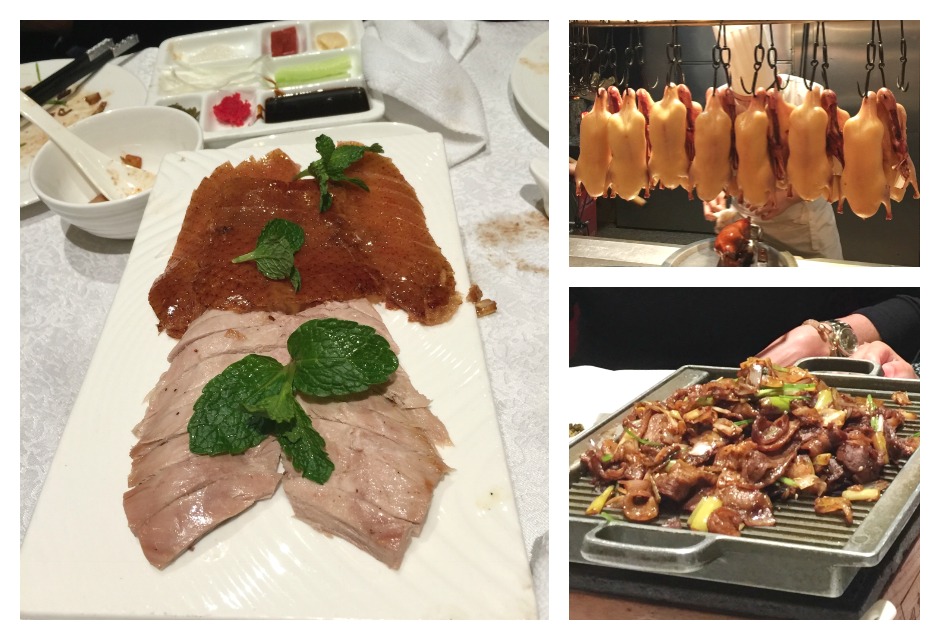
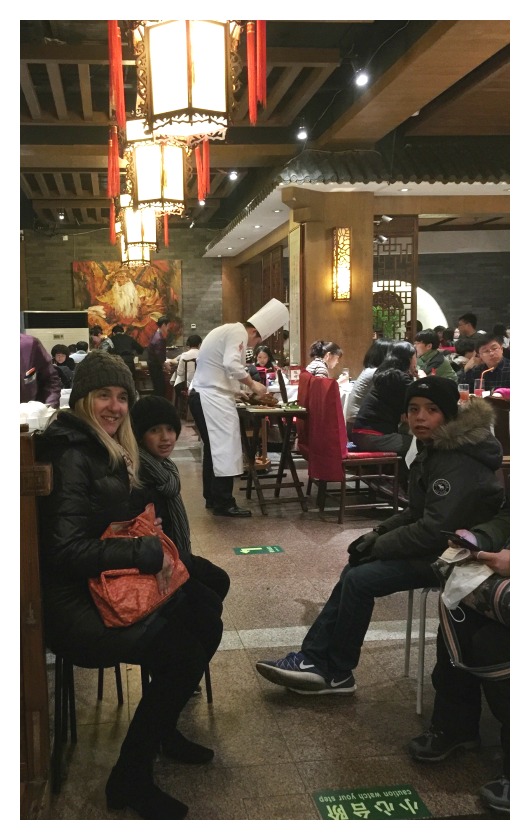
When in Beijing, you simply cannot miss one of the city’s most iconic and delicious dishes: Beijing Duck. During our visit, we went to Siji Minfu, a well-known and highly regarded restaurant, and it was an unforgettable experience from start to finish. From the atmosphere to the presentation, everything exceeded our expectations.
Traditionally served with delicate, crepe-like lotus leaf pancakes (heye bing), sweet noodle sauce (tian mian jiang), and fresh green onions, the famous slow-roasted duck is rich, flavorful, and perfectly balanced. Each bite combines crisp skin, tender meat, and just the right hint of sweetness, making it a dish everyone should try at least once in their lifetime.
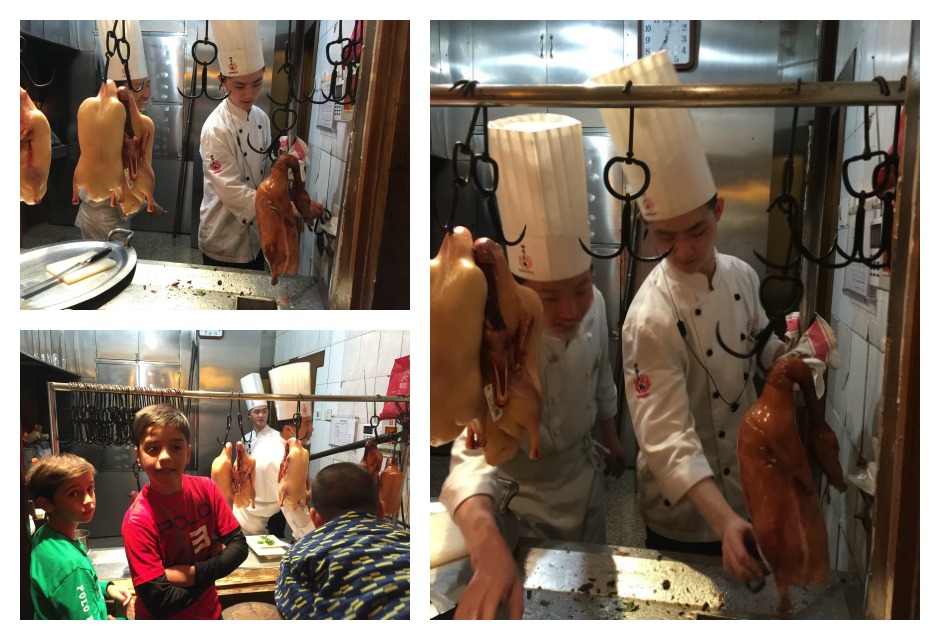
One of the highlights of our meal was watching a highly skilled chef slice the freshly roasted duck right at our table. The precision and care involved felt almost ceremonial, and as far as I can tell, this tableside carving is a long-standing tradition that honors the dish’s imperial roots.
Historically, Beijing Duck dates back to the Yuan Dynasty (1206–1368), when it was considered an imperial delicacy reserved for the royal court. Later, between 1522 and 1566, the first roast duck restaurants opened their doors to the general public, allowing more people to experience this legendary dish.
So what makes Beijing Duck truly unique? The secret lies in its roasting method. The oven walls are first heated with sorghum stalks, and once the fire is removed, the duck is placed inside to cook evenly from the radiant heat of the walls. This technique results in skin that is irresistibly crisp, meat that is tender and juicy, and flavors that are simply unforgettable.